


Last month, I took the stage at TEDxAmoskeagMillyard, an independently organized TEDx event. Since the event, I’ve gotten a lot of questions about the preparation process and learnings along the way, and wanted to share a bit more about my story while we wait for the recordings to be released.

Q: What was your talk’s key message?
A: My talk begins with an unexpected diagnosis in my early 30s with celiac disease, an autoimmune disorder, and ends with a three-step framework for redirecting the momentum from undesired change to cultivate a personal renaissance centered around positive, intentional choices. Strategy, change management, and renaissance energy – that’s the short version. My talk comes back to the principle Strategy Stories is centered around: the best of strategic thinking is highly relevant outside of the boardrooms with which we traditionally associate strategy, and transferable in a broader range of personal and organizational settings.
Q: How does one get involved with a TEDx event?
A: TEDx is a grassroots initiative where local volunteers get a license from TED to host an event. TEDx events vary in terms of processes and requirements to become a speaker. Some require speakers to reside within a certain state or within a given radius of the event, or to speak on a certain theme. There’s often a nomination process where you can nominate a speaker, including yourself, and then a subsequent review process from the organizers. Since the events are volunteer run, there are also likely opportunities for you to engage as a volunteer with an event near you.
Q: What was the preparation process like?
A: After being confirmed as a speaker, I began by outlining my intended talk to find the flow and then building out the script. In hindsight, I wish I had done my first script draft by speaking extemporaneously about the topic for about ten minutes before trying to put pen to paper. I ended up doing a lot of last minute script changes as I got deeper into rehearsals and started to realize that the best sentence on paper isn’t always the one that’s clearest to articulate verbally. I also found that the presence of dry humor expanded with each iteration of the talk as I grew more comfortable with the script and letting my authentic voice come through.
Q: How did you memorize your talk?
A: Research suggests that simultaneous exercise and memorization drills can boost recall of discrete information. I recorded an audio loop of myself delivering my talk, script in hand, and listened to it during each strength training session for the two weeks prior to the event. My weightlifting circuit takes about 40 minutes to complete, which yielded me three to four full cycles of listening to my full talk in my own voice. This practice helped me both memorize the talk and identify where phrasing was off-kilter. Most importantly, listening reinforced the sequence of key segments so that if I lost my place while speaking at the event – which I did – I could quickly improvise to the next segment without losing a beat.
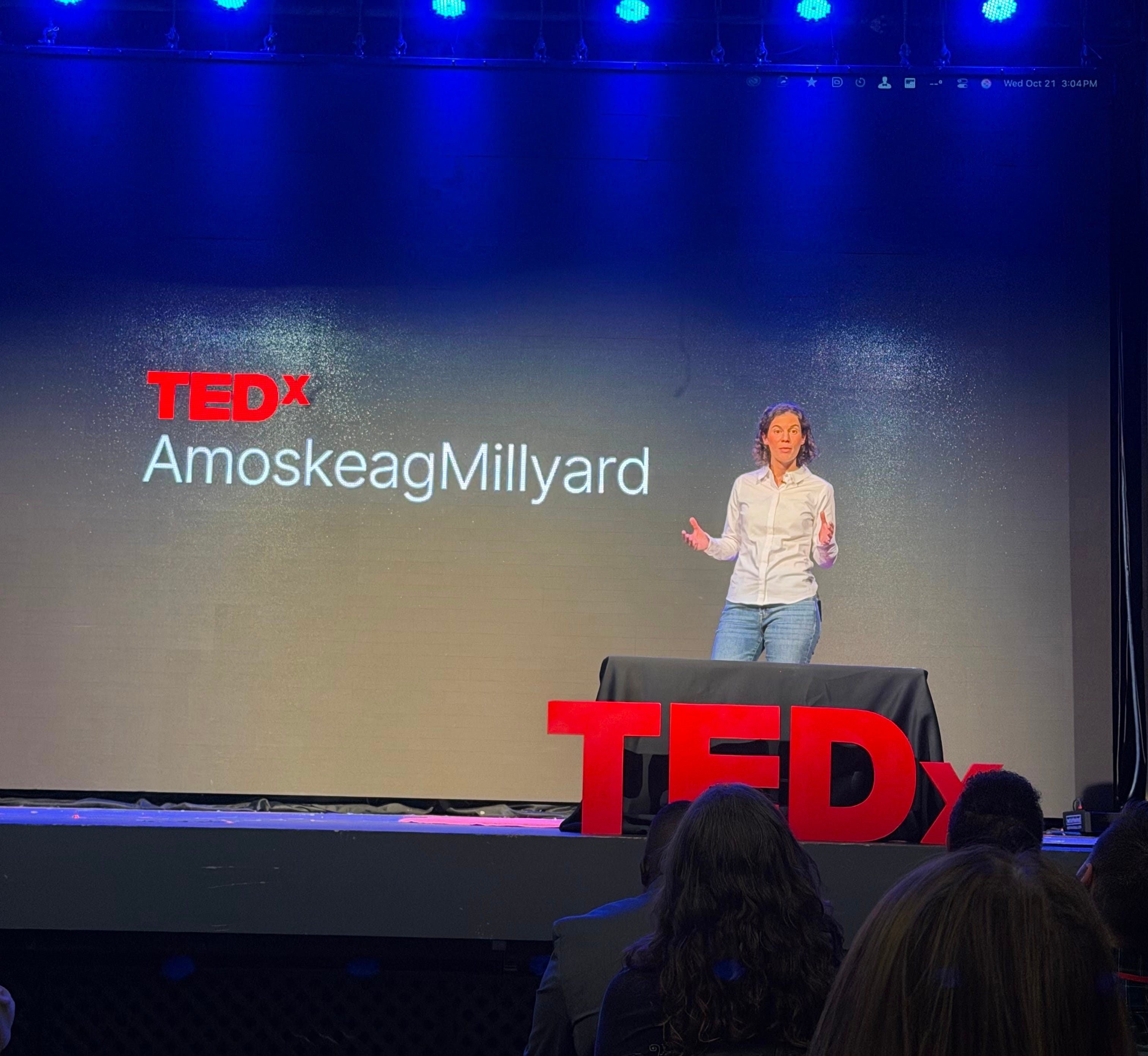
Q: How did you decide what to wear?
A: I struggled with this question right up until the week before. TEDxAM event colors focus heavily on black and red – not a great combination with my usual range of muted earth tones. I also wanted something that spoke to the undertones of my talk: honest vulnerability, building strength, and leveraging a strategic lens. My talk would have more of an approachable tone and less of a business formal vibe, and the aggressive sock tan lines from concurrent marathon training brought in another layer of complexity. I landed with an outfit that college-aged Jackie would have approved of – combat-style boots to be grounded, jeans to feel comfortable and relatable, and a white button down to show that I remembered to dress up, somewhat.
Q: So, when can I watch your talk?
A: Following any TEDx event, the organizers assemble, edit, and review the video recording from each talk. The videos then go to TED for a comprehensive review process to ensure alignment with TED guidelines and the TEDx brand. From there, each video gets released following the final approval. I’m anticipating that my video will be available in early 2027. I’ll share the link first on Strategy Stories, so make sure you are subscribed to be an early viewer!
Whether you’re thinking about your own TEDx talk or another speaking event, I hope these learnings offer some transferable insights. Most critically, I highly recommend giving yourself the time and space to find your authentic speaking voice early in the process, and to find the memorization strategy that helps you not just remember the words, but internalize the story arc. A clear story arc can weather any missteps during a speech.
Thanks for reading Strategy Stories by Lavorgna Strategy Studio!
About Strategy Stories
Strategy Stories is built on a single belief: the most useful strategic insights don’t always come from inside your industry. Through this platform, Jackie Lavorgna, PhD, SMP shares case studies, analyses, and anecdotes for curious leaders, strategists, innovators, and futurists — spanning readers throughout the United States and across 16+ countries.
Strategy Stories is the insights vertical of Lavorgna Strategy Studio, a consultancy helping leaders, teams, and organizations prepare and plan for the future through strategic planning and strategic foresight.
Very interesting.
I love your breakdown of your experience, Jackie, and the strategic approach you took throughout your preparation.
I can’t wait for your talk to go live so everyone that didn’t have the good fortune to hear you that day will have a chance to enjoy your talk.